
- Every SAR Drone Technology
Technology for Every SAR Drone
Live Aware introduces life-saving technology designed for virtually every type of SAR Drone used in modern Search and Rescue operations.
The reason is simple. Traditional SAR Drone systems that rely on regular cameras, thermal imaging, or human visual observation often face serious limitations caused by visual bird-eye blind spots. The Live Aware SAR App overcomes these limitations through advanced Radio Direction Finding (RDF) technology.
Every SAR Drone
Public Safety View
- Live
- Live
2,486
signals
91%
RDF density
+18%
increase
Privacy by design
Anonymous RF/BLE sensing
Real-time insight
Live crowd analytics
50–100m range
Flexible sensor coverage
Operator alerts
Threshold notifications
Advanced SAR Drone Search and Rescue Intelligence
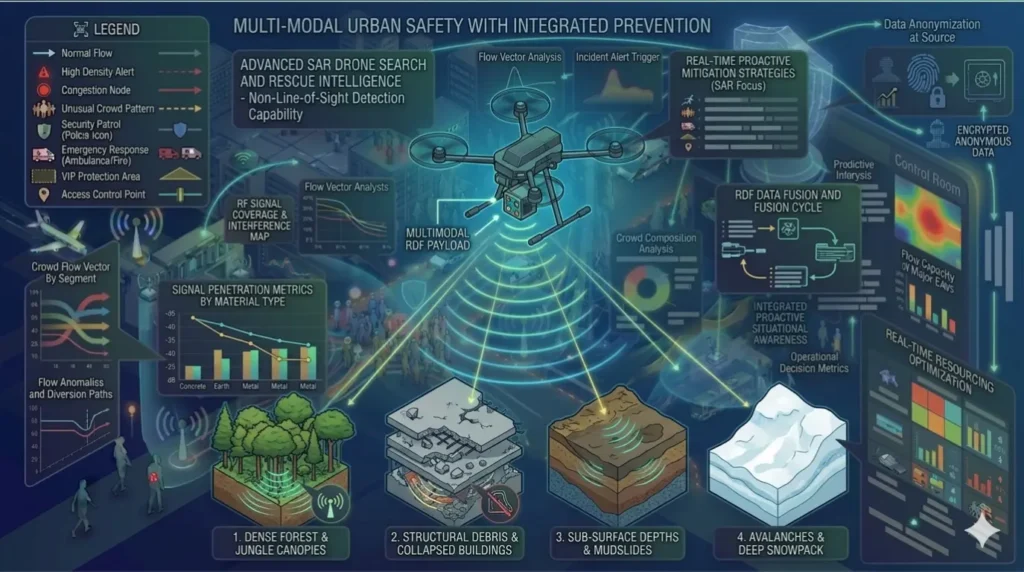
Unlike standard SAR Drone cameras or thermal systems, RDF technology does not require direct line of sight to detect signals. This enables the SAR Drone to locate wireless devices even in environments where visual systems are obstructed or ineffective.
The SAR Drone platform can detect signals through obstacles such as:
Debris and collapsed structures
Dense forests and vegetation
Rugged mountain terrain
Snow and ice environments
Smoke and fog conditions
Avalanche zones and rocky landscapes
When combined with optical and thermal sensors, the Live Aware SAR Drone significantly reduces visual blind spots and improves Search and Rescue effectiveness in challenging environments.
SAR Drone Technology
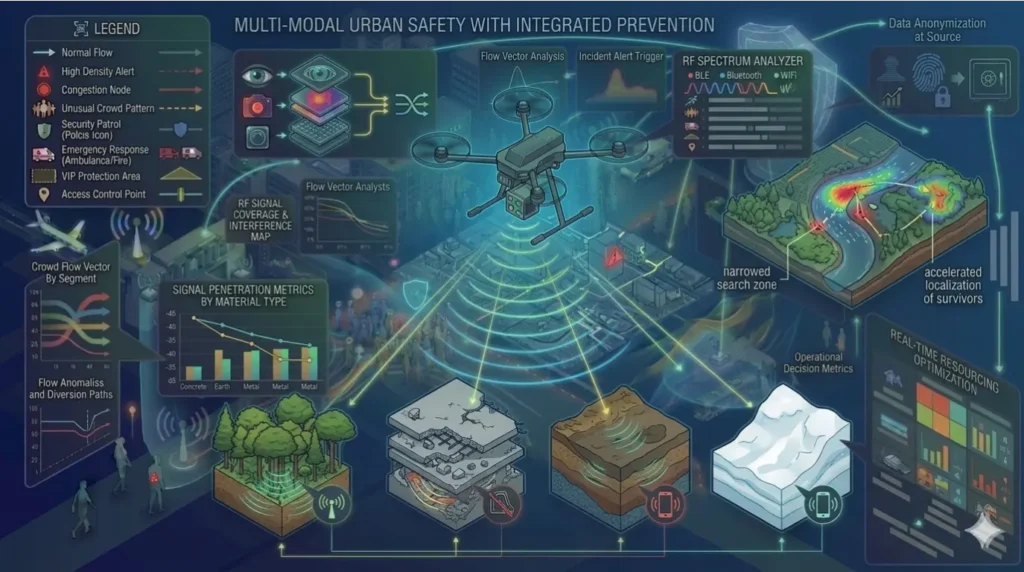
Working together with human observation, thermal cameras, and optical sensors, the Live Aware SAR Drone platform helps narrow search zones and accelerate survivor localization.
The SAR App functions as a multi-layered RF toolkit that enhances Search and Rescue situational awareness and operational efficiency.
While thermal imaging and cameras depend on clear visibility and direct line of sight, the SAR Drone platform provides actionable intelligence by detecting and locating RF signals from wireless BLE, Bluetooth, and optionally WiFi-enabled devices.
SAR Drone Detection Capabilities
The Live Aware SAR Drone can detect signals from a wide variety of wireless devices, including:
Smartphones
Smartwatches
Fitness trackers
Wireless hearables
Hearing aids
Medical monitoring devices
Biosensors
Smart rings
Bluetooth-enabled accessories
This allows Search and Rescue teams to identify potential survivor locations even when visual confirmation is difficult or impossible.
SAR Drone with Radio Direction Finding Technology
The advantages of integrating Radio Direction Finding technology into a SAR Drone are extensive and highly
valuable during Search and Rescue missions.
SAR Drone Operations in Winter Conditions
In winter environments, missing persons often generate weak thermal signatures. Snow, ice, heavy clothing, and rescue gear reduce heat visibility, while steep and uneven terrain creates additional visual shadow gaps.
A SAR Drone equipped with RDF technology can continue detecting RF signals even when thermal cameras struggle to identify human heat signatures.
SAR Drone Effectiveness During Summer Conditions
During summer operations, thermal clutter caused by heated rocks, vegetation, and wildlife makes isolating human heat signatures far more difficult.
Dense tree canopies and environmental heat reflections further reduce thermal contrast and visual detection effectiveness.
The Live Aware SAR Drone overcomes these challenges by focusing on RF signal intelligence rather than relying solely on thermal imaging or visual observation.
SAR Drone Performance in Forests and Poor Weather
Forest environments and poor weather conditions create major obstacles for traditional SAR Drone camera systems.
Canopy cover, fog, smoke, humidity, and dense vegetation can obstruct both optical and thermal sensors. Cameras only capture surface-level information, allowing vegetation and terrain to conceal individuals and create dangerous blind spots.
The Live Aware SAR Drone adds an additional layer of operational intelligence through RF signal detection, helping Search and Rescue teams improve situational awareness and locate missing persons faster in difficult conditions.